Fall, the season with high skies and added pounds. As the weather gradually cools down and outdoor activities diminish, more people become interested in dieting. Many wonder if exercise alone can lead to weight loss. However, experts emphasize that achieving successful dieting primarily involves calorie restriction.
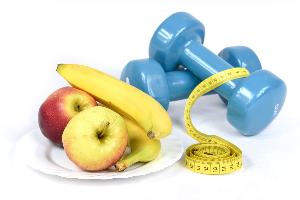
The core of dieting is limiting calorie intake to reduce body fat. To put it into perspective, converting 1 kg of body fat into calories requires approximately 7,700 kcal. Based on this calculation, it is expected that you need to expend 7,700 kcal more than you consume in calories to reduce 1 kg of body fat.
A typical serving of rice contains about 300 kcal. Therefore, if you reduce your daily rice intake by half, you can cut approximately 450 kcal from your calorie intake. If your calorie expenditure remains the same, you can expect to lose around 1 kg of body fat every 2-3 weeks through this method. However, it's important to note that exercise alone is not an effective means of weight management.
The Importance of Moderate and High-Intensity Exercise Generally, the recommended amount of exercise is 150 minutes of moderate-intensity exercise per week or 75 minutes of high-intensity exercise. Moderate-intensity exercise is scored as 1 point per minute of exercise, while high-intensity exercise is scored as 2 points per minute. Achieving 150 points or more in a week is considered meeting the recommended exercise level. However, it's important to understand that these recommended levels are not for weight control but for preventing cardiovascular diseases and other health benefits. In reality, more exercise is needed to effectively manage body weight.
Distinguishing between moderate and high-intensity exercise is straightforward, as it's based on heart rate. Typically, exercise within 64-76% of your maximum heart rate is considered moderate-intensity, while exercise at 77% or higher is considered high-intensity. Your maximum heart rate can be calculated as '220 - your age.' For example, if you're 40 years old and want to engage in moderate-intensity exercise, you should aim for a heart rate of at least (220 - 40) × 0.64 = 115 beats per minute.
Is High-Intensity Exercise More Effective? So, how many calories can you burn through exercise? Calculating your calorie expenditure and intake can help you plan your weight management effectively, using a unit called MET (Metabolic Equivalent of Task).
Moderate-intensity exercise generally falls within the range of 3-6 MET, while high-intensity exercise is above 6 MET. For instance, assuming a 70 kg person exercises for 120 minutes of moderate-intensity exercise and 30 minutes of high-intensity exercise per week, they would burn about 840 kcal in a week. To reduce 1 kg of body fat, it would take at least two and a half months with this exercise routine.
When aiming for weight loss through exercise, it's crucial to combine calorie restriction in the short term and establish exercise habits. Additionally, maintaining a consistent exercise routine even after reaching your target weight is essential to prevent rebounding. If you have limited time for exercise, concentrating high-intensity workouts on the weekends may also be effective. However, be cautious, as intense workouts in a short period can increase the risk of injury.
'생활백서' 카테고리의 다른 글
| National Taxes Draining Away: Unemployment Benefits for Repeated Recipients Set to Increase, while Reemployment Hits a Low. (15) | 2023.10.17 |
|---|---|
| Rising Male Infertility: Healthy Sperm Management Tips for Future Generations. (15) | 2023.10.17 |
| 치매는 극복할 수 있는 질병일까, 새로운 치료제의 등장. (60) | 2023.10.16 |
| 치매 예방을 위한 뇌 건강을 지켜주는 식품들에 대하여. (55) | 2023.10.16 |
| 기억이 사라지는 공포 치매, 가족력과 유전의 영향에 대하여. (81) | 2023.10.16 |


